
Revision Hip Replacement: When Your Hip Replacement Needs a Second Chapter
If your once-comfortable hip replacement has started aching, clicking, or feeling unstable again, please hear this first: this is a known, well-understood situation with a well-established solution.
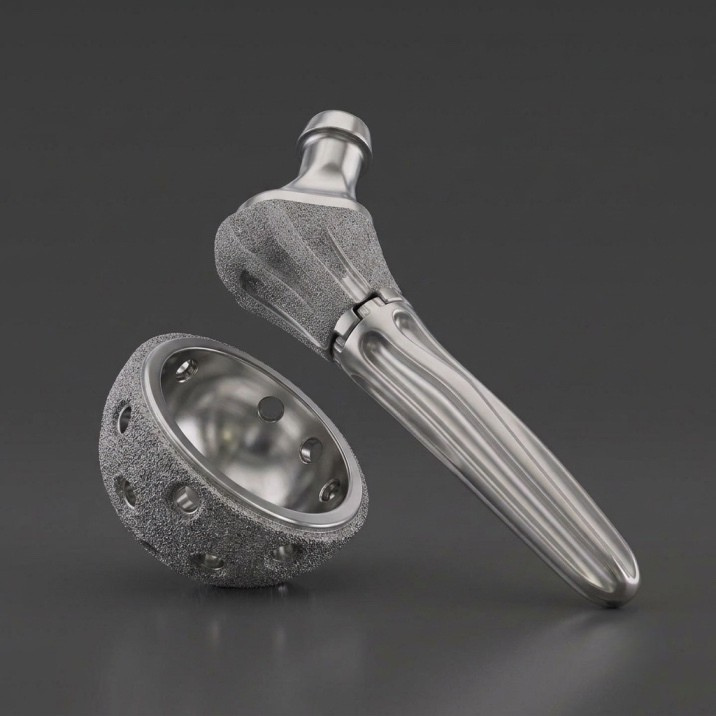
Hip replacements are wonderfully durable — but they are mechanical, and after 15 or 20 faithful years, parts can loosen or wear, just like any well-used machine. It is not a failure, and it is not the end of your mobility.
Why would a hip replacement need redoing?
The most common reasons are gradual and mechanical: the implant’s bearing surface slowly wears down, or the bond between implant and bone loosens over many years. Less commonly, an infection or a fall can affect the joint earlier. Whatever the cause, the symptoms are usually similar — returning pain, a sense that the hip isn’t “solid,” or difficulty walking distances you used to manage easily.
How is revision surgery different from the first operation?
Think of it as specialist work rather than routine work. The old components are carefully removed, the bone is prepared and — where needed — reinforced, and new implants designed specifically for revision cases are fitted. It’s a longer, more intricate operation than a first-time replacement, which is exactly why choosing a surgeon with dedicated revision expertise matters. This is one of Dr. Kalaivanan’s core specialisations, supported by advanced planning tools and implant systems built for complex cases.
What will recovery look like?
Honestly: a little slower than your first replacement — and that’s okay. You’ll still be up and walking with support within a day or two. Protected walking typically continues a few weeks longer than after a primary replacement, and physiotherapy is gentler and more gradual. Most patients find that by three months they are walking more comfortably than they had in years, with steady improvement continuing well beyond.
Common questions, honest answers
Is revision surgery riskier?
It is more complex, which is precisely why it should be done by a surgeon who performs revisions regularly, with proper planning and imaging. In experienced hands, outcomes are very good and patient satisfaction is high.
How long will the new implant last?
Revision implants are engineered for durability, and most patients can expect many years — often decades — of reliable use.
How do I know if my old hip is failing?
New pain, new sounds, a feeling of looseness, or shortening of the leg are all worth checking. A simple X-ray usually tells us most of the story.
The first step is just an assessment
If your hip replacement doesn’t feel the way it used to, don’t wait and worry — an examination and X-ray will give you clear answers, and often earlier assessment means simpler treatment.
This page is for general education and is not a substitute for personal medical advice. Every patient is different — please consult a qualified orthopaedic surgeon about your specific condition.